Author: admin

  • Changes in Attitudes, Changes in Latitudes

    Changes in Attitudes, Changes in Latitudes

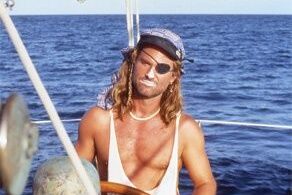
    I took some time to think about Jimmy Buffett’s passing. I enjoyed him since the early 1970s and loved to sail over from Niagara to his concerts at the Molson amphitheater in Toronto and it was almost a fun religious event.

    Back when Compuserve was big, I accidentally got backstage for about 5 hours and met him snd his team. I was in heaven.

    I wasn’t allowed to take pictures and this was far before I was a photographer, but I did surreptitiously take one photo that captured the moment, I thought at the time.

    When I got back to Niagara I gave the only copy to my favourite bartender.

    A couple of days ago I was sitting on the sailboat and thought, for some reason how much fun it would have been to do a portrait shoot of Jimmy Buffett. I’m sure his Songs You Know By Heart would have been dancing through my head while I was setting lighting, relating to the subject of the photograph, fiddling with the camera’s knobs and creating the vision of the artist that had made me so happy for so many years.

    The picture happened and it was as close to a photoshoot with Jimmy Buffet as I could ever get, but somewhere a bartender named Lenny has that germ of my dream on his mantelpiece.

  • Sunset Photoshoots on Cambio

    Sunset Photoshoots on Cambio

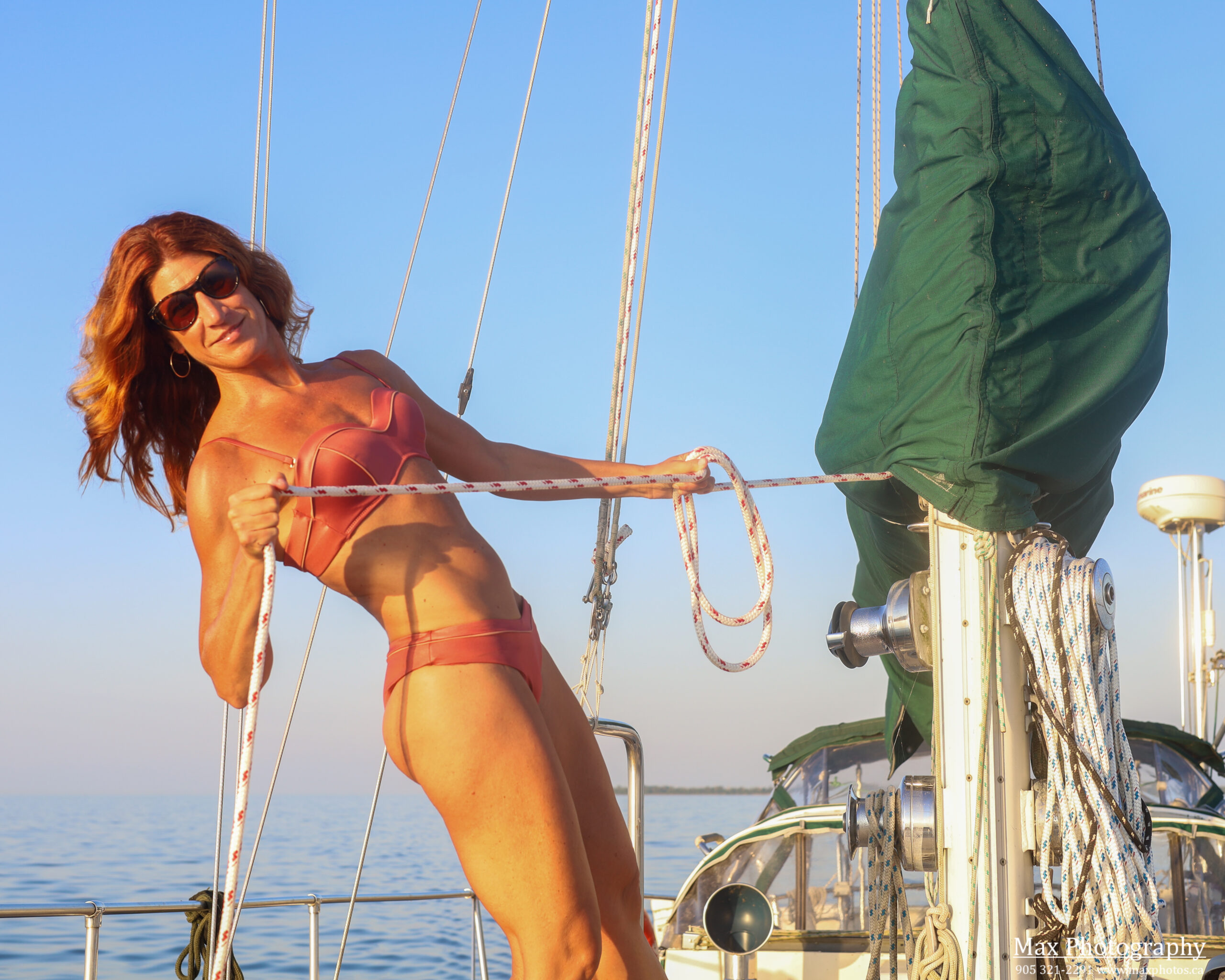
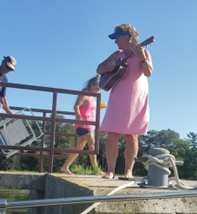
    We’re back doing fun sunset photoshoots on Cambio this season. This is Celina’s first photoshoot and she slayed it. Photoshoots are ongoing this summer until we point the boat south in late August and head for the Caribbean.

    I plan to offer Caribbean photoshoots on Cambio and various beaches so if you are wanting to spend March break or some other time on a 41′ sailboat in the tropics, contact me at philcheevers@hotmail.com for rates and dates. We’ll be in the Bahamas in December.

  • Planning the Atlantic Crossing in 2024

    Planning the Atlantic Crossing in 2024

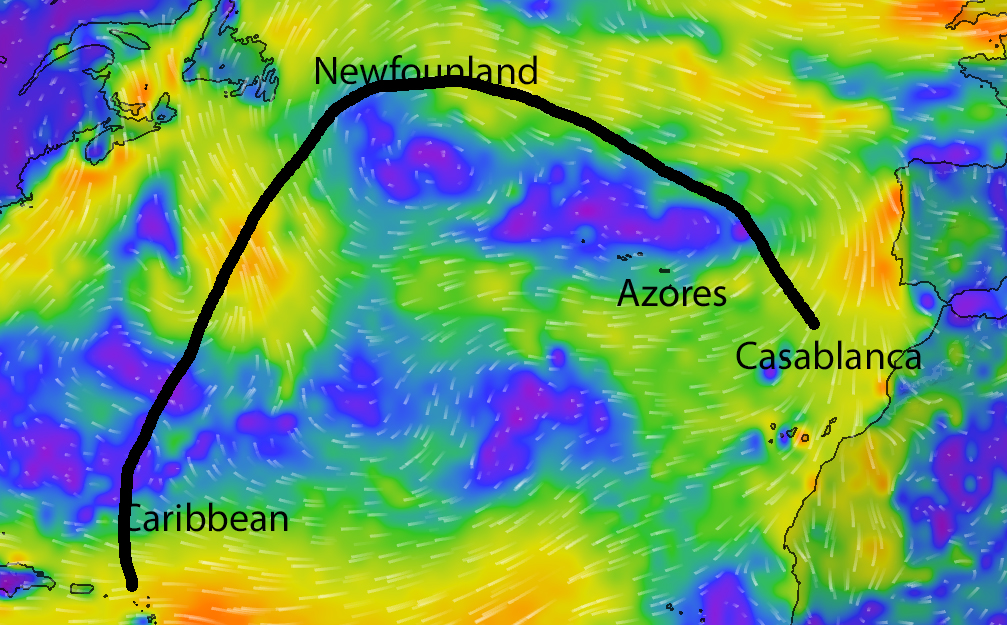
    We are about 50 days away from leaving Lake Ontario and heading south to the Caribbean and I started to do some long term planning using Predictwind, a web application that tells us which way the wind blows around the world.

    I wanted to get a feel for what the wind in the Atlantic is doing this time of year, because this time next year we will be crossing the Atlantic. We’d start the crossing in about May before hurricane season The course will be from the British Virgin Islands area and head for the Azores, and then to Casablanca, in Northern Africa.

    Cruisers like to go mostly downwind and Predictwind tells us which way the wind is blowing now, and where it is likely to be blowing in in the near future. But as an example, we could head east today and in 5 days find out that the wind has changed and is now blowing to the west, directly in front of us, and all our weather planning would have to change and we might have to divert hundreds of miles.

    If a boat can average 6 knots per hour, and we are sailing 24 hours per day, we could average 144 miles per day in ideal conditions. We have to know where the wind is blowing now, and where it will be blowing in the near future and adjust our course like magicians or we could add days to the trip.

    Today’s weathermap isn’t very encouraging. The Azores High, which circles clockwise around the centre of the Atlantic Ocean has moved very far north. If we followed the black line downwind and the High didn’t change, then the trip becomes almost 4,000 nautical miles, or about 40 days of passagemaking. That takes us too far north and will take too long, I think. It should be about 12 days from the Caribbean to the Azores and another 7 days from the Azores to North Africa.

    There are many professionals who use worldwide data and predict where the wind and weather will change over a short period of time. Savvy sailors receive updates and guidance every day from these weather services. This allows them to adjust their direction to the safest and most efficient course. But in the end, each skipper must take all the information they have at the time to make safe and efficient decisions.

  • An Opportunity to Join Our Crew on the Big Trip from Lake Ontario to the Caribbean

    An Opportunity to Join Our Crew on the Big Trip from Lake Ontario to the Caribbean

    Experience the Ultimate Sailing Adventure with Cambio – Join Our Crew Today!

    Looking for a thrilling sailing experience that won’t break the bank? Look no further than Cambio, a remarkable 41′ sailboat seeking crew members for an incredible journey. We invite you to come aboard and embark on an unforgettable adventure, where the cost to crew is solely personal expenses. The boat is setting sail, and you have the opportunity to join us!

    Why Choose Cambio?

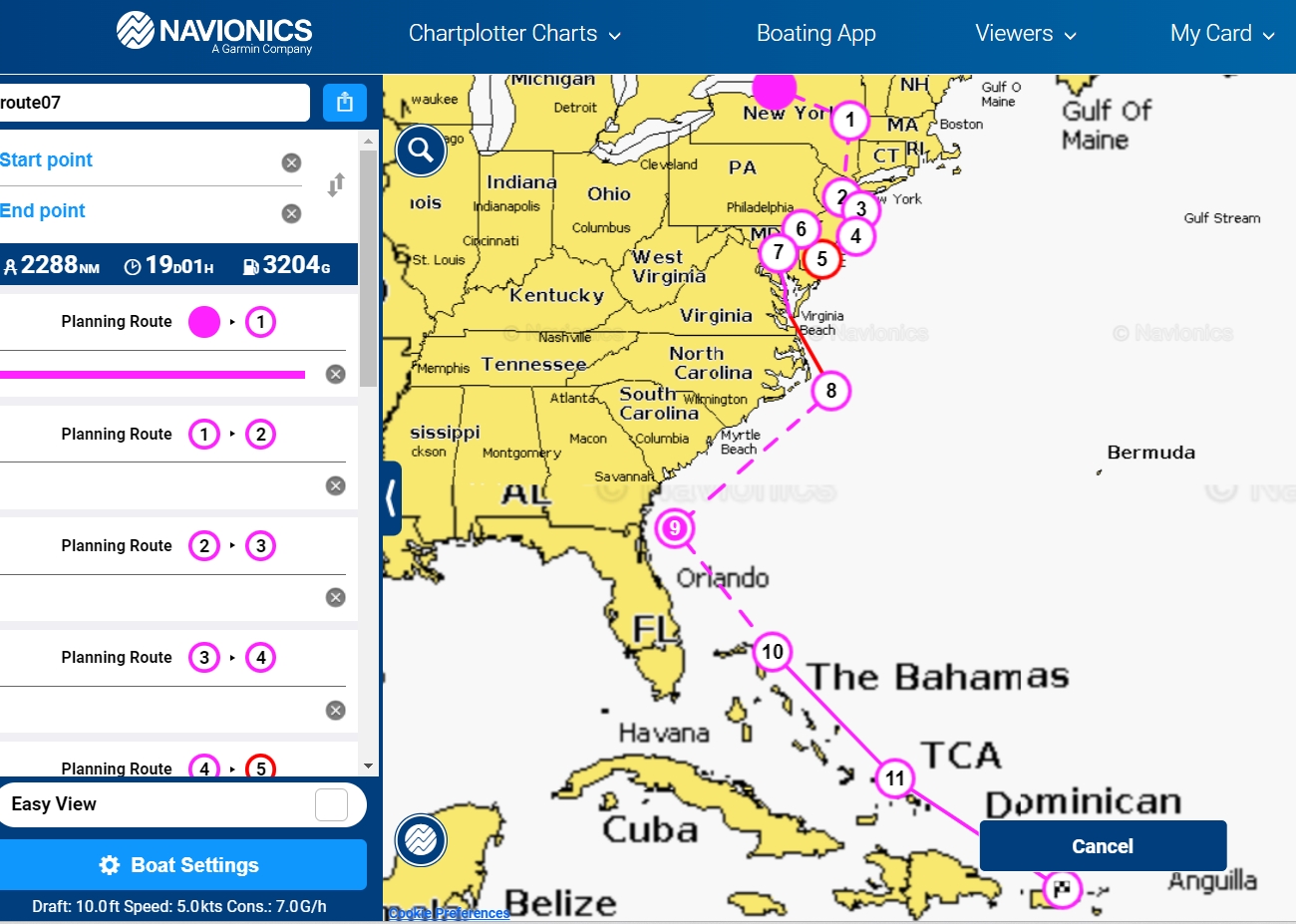
    1. Explore the Eastern US Seaboard: Departing from Lake Ontario, New York on September 1st, we’ll navigate the Eastern US Seaboard, allowing you to witness stunning coastlines and breathtaking sunsets along the way. Our journey will lead us to Annapolis, Maryland, where you’ll have the chance to experience the charm of this historic sailing town.
    2. Uncover the Wonders of the Bahamas: In December 2023, we’ll set our course for the mesmerizing Bahamas. Immerse yourself in the crystal-clear waters, relax on pristine beaches, and discover hidden coves and vibrant coral reefs. This is your opportunity to indulge in a stunning vacation while building precious miles of sailing experience.
    3. Embrace the Magic of the Caribbean: From the British Virgin Islands to the US Virgin Islands, the Spanish Virgin Islands, and the captivating Lesser Antilles, our voyage will take you through the most picturesque destinations in the Caribbean. Perfect for students on a gap year, this experience will provide a change of pace and offer the adventure of a lifetime.

    Who Is This Opportunity Perfect For?

    If you’re a student with sailing experience seeking a meaningful gap year experience, Cambio is the perfect fit for you. Join our crew and gain valuable sailing skills while exploring breathtaking locations. Additionally, if you’re looking to build miles and enhance your sailing resume, this journey offers an excellent opportunity for mile building and hands-on experience.

    Flexible Options: Join All or Part of the Journey

    We understand the importance of flexibility. Whether you can commit to the entire voyage or only a portion of it, we welcome you aboard Cambio. This journey offers the perfect escape and change of pace from your routine, allowing you to unwind and embrace new challenges.

    How to Join

    To secure your spot on this extraordinary adventure, please email your interest to philcheevers@hotmail.com. Our crew coordinator will provide you with further details and assist you throughout the application process. Don’t miss out on this chance to embark on a stunning vacation, gain invaluable experience, and create memories that will last a lifetime.

    Join Cambio’s crew and sail into a world of endless possibilities. We invite you to come aboard and embark on an unforgettable adventure, where the cost to crew is solely personal expenses. The boat is setting sail, and you have the opportunity to join us!…

    Note: Please be aware that travel and itinerary details are subject to change due to weather conditions and unforeseen circumstances. Contact philcheevers@hotmail.com for the latest updates. P.S. if this sounds to effusive, please blame ChatGPT.

  • We had an Accident on Cambio Last Week.

    We had an Accident on Cambio Last Week.

    What this is about.

    We had an accident on Cambio the other day. 

    It was a gorgeous day on the sailboat, almost no wind, and completely unexpected.  The crew involved were experienced. There was no mechanical failure. In short, there was no reason for this accident to have happened.  And no warning.  And 2 guys got hurt in no time at all.

    Why this is Important?

    People jumped to help at a moment’s notice.  They knew what to do.  They did the right thing, mostly.

    And we should do a few things further.  First, find out what happened and share that knowledge.  Acknowledge the people who brought their skills and earnestness to help.  Acknowledge what was done right and identify what could have been done better.  Communicate the experience.

    What happened?

    Cambio was on her way to get her black tank pumped at the pooper dock in the marina.  The wind was less than a knot, it was a sunny day, almost dead calm.  It was about 400 yards from Cambio’s home dock to the pooper dock.  We didn’t even need to pump out, but we were going to be working on the onboard toilet and it is just the right thing to do.  Nobody wants to work in any poop that is unnecessary. It was a gorgeous day.

    My brother Jeff was standing at Cambio’s entry way with the spring line in one hand and the stern line in his other.   I remember thinking how competent he looked as we coasted at Cambio’s slowest speed towards the pooper dock.  I went to neutral about 150 yards from the dock and drifted.  It was a lovely day, and nobody was in any hurry.  

    The boat came alongside the dock, practically at a standstill.  Jeff looked back and then stepped onto the dock.  

    The ball of his foot hit the dock and his foot bent upwards.  His foot slipped into the water and his legs went down, slipping both feet into the water.  He bent over from the waist and his chest hit the dock square on.  His face hit the dock hard on the left side.  He stopped still and I thought he had avoided a close call.  I grabbed the stern line and loosely tied it to the nearest cleat and went forward to the entry.   On the way he started to slip back in the water and I started yelling help.  I got to the entry way and watched him slip back and under the water.   I jumped fast.  My knees gave way.  I pitched forward and my eye hit the cleat on the far side of the dock.  My knees were damaged.  The dock was wobbling and I don’t know if or how long I was unconscious.  Someone, Mike jumped over me and reached down into the water.  He pulled Jeff up above the water and tried to lift him back on the dock but Jeff was wet, lifeless, and very heavy.  

    Noel appeared at his side and the two of them pulled Jeff up and on to the dock.  He lay there on his back appearing lifeless.  I was laying on the dock next to his ankle asking him to move his hand and rubbing his ankle.  I could do no more but people were arriving.  A nurse, her husband, and a number of others, crowding the end of the dock.  I could hear the nurse coaching Mike and Noel and saw Jeff move his hand.

    People started to organize, asking people to stand away from the dock.  Franco stood where the dock hinged and tried to keep it from rocking.  

    I heard someone say that 911 had been called and that 2 ambulances were on their way.  I told anyone who would listen to take care of Jeff first. 

    The ambulance teams seemed to swarm over the dock and Mike, Noel, the nurse, and her husband carefully traded place with the 911 teams as they brought over the stretcher.   I had still not gotten up, and my eye was flooded with blood.  I looked up and Jeff’s stretcher was carried over me towards the ambulance and then was gone.  Those ambulance dudes were strong!

    Then strong arms picked me up and put me in a chair for transport.   My head was gushing blood and I could barely see.

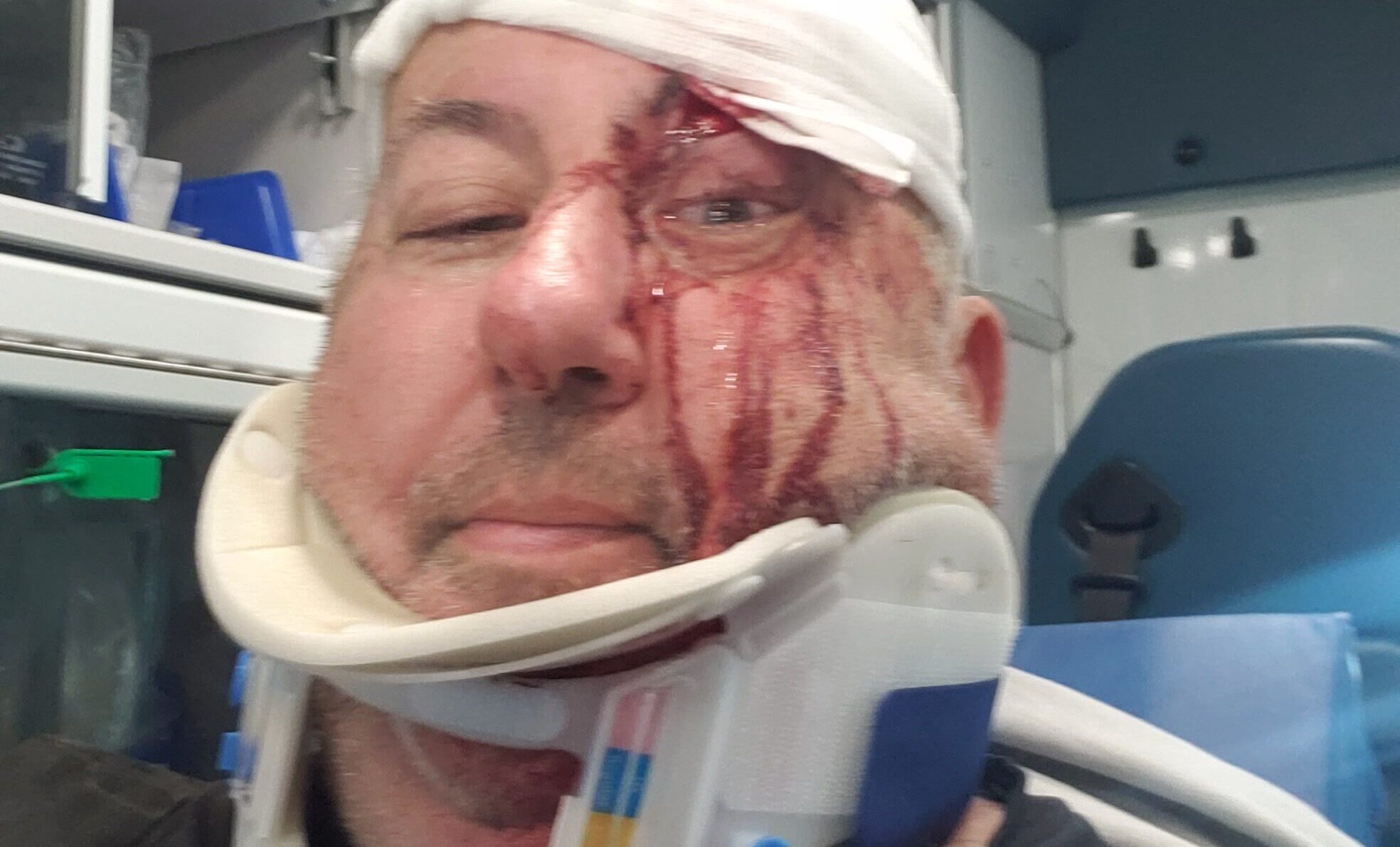
    At Niagara Falls hospital I took 24 stitches to my left eye, bandaged scrapes on my right knee, CT scan for concussion.  I’m still waiting xray results to the knees. 

    Jeff was under dirty water for something like 30 seconds, lacerations to his face, broken bones in his cheek bone areas, possible water in his lungs, scraped quadriceps, a whack in the chest, and possible head trauma.

    What happened next

    Processing

    As soon as I became aware of what happened intellectually, I began coming to grips with what had happened.  I suppose that this processing would resemble stages of grief.  “It couldn’t have happened” “It is all my fault” I should have done x, or y, or done it faster or better.”  I don’t suppose that will ever end.

    Inquiry

    I asked an experienced online group, (Ryan and Sophie’s Patreon WhatsApp group) the following question,

    I recall someone handling a bad burn on a long cruise and wondered what is in your aid kit now years later.   I’m not asking about burn products but more about the process of rethinking based on tragedy.  What did you change and how did you rethink it.  

    I had a nonfatal accident this weekend onboard and am looking for help in dealing with it.”

    The answers, which were excellent thought leadership and relevant, tended to focus on big health risks causes on heroic passages.  They focused on time to getting primary care (imagine days of burst appendix on a crossing.), advanced first aid, procurement of an effective set of drugs, courses in marine cruising medical practices, and other considerations. 

    “We realized a number of things after the burn accident.  The first being you need way more equipment (bandages, gauze, tapes, etc) than you realize. Especially if you’re out on your own in the ocean. There is no convenient way to get more supplies or help. If you have a burn, cut, whatever and you’re 5 days away from shore and need to keep a wound clean you are going to go through a lot of stuff.  Even more if there is multiple emergencies, which is typically what happens.

    We now have three very big bins on board which is structured to support 3 crew for an ocean crossing.  It includes 2 boxes with all the equipment of tapes, bandages, etc. and a third box for medication which range from 4 type of antibiotics to pain killers, stoppers and goers (if you know what I mean).

    Also we are taking a wilderness first aid course is really critical.  It allows you to think differently than just calling 911

    Phil, specifically on how to cope with trauma and traumatic experience (if that what your asking) that’s probably above my experience level.  I always tell people that you’re not the first one to do whatever it is you did and you won’t be the last.  It’s best to share your experiences with others and we can all learn.  That’s one thing I hope this space can be used for.  No judgment from this group

    Experience talking:

    One thing I learned on my solo crossing.  I was the weakest link.  If I got hurt, the whole experience would have been a lot different.  So you have to protect yourself at all cost, then the boat.  Just remember, you will break before the boat does.

    Another comment, probably closer to the scale of my accident said,

    It’s at a lower level but that’s why I wear a life jacket when I’m out in a dinghy with little kids. They are in so much trouble if we have anything at all go sideways. Even if they are old enough to manage the dinghy. Who protects the protector?

    Gratefulness

    Who are these wonderful people? Why are they the way they are? There were people who stayed off the dock to allow helpers to work on us and the nurse who coached Noel and Mike in the first critical seconds. There were paramedics and the hospital staff.  There was the doctor who, while he was putting in my stitches, I asked, “Will my forehead shape be more of a Ferengi or a Klingon look.”  My answer to his, “I don’t watch Star Trek” was “I guess it won’t help to ask if you are going for an original series Klingon or a TNG turtle look”.  There were the team of friends who took my brother overnight back to Ottawa for further hospital care. There were many who called with concerns, and we were never alone.

    Thank You.
  • +1 905 321 2291

    +1 905 321 2291

    There are only a few reasons to call this number. 

    1. If you want to buy a canvas cover for a 41’ Cheoy Lee sailboat.   I have one for sail. I’m going down south and won’t need it for many years.  It is a ‘Natty Genco’ and a recent quote for a new one is over $7,000.  I’m asking half that at $3500.  
    2. If you have some time to join the crew of Cambio for her long distance cruise from Lake Ontario and going to the Caribbean.  We are looking for crew for all or part of the trip and this would be a perfect gap year project or a bucket list endevour.

    As an alternative, you could do the following:

    You could also email to philcheevers@hotmail.com

    You could scope out the boat and her skipper at www.sailingcambio.com  

    Looking forward to hearing from you! -Phil

  • Are you looking for bucket list, gap year, or just plain adventure?

    Are you looking for bucket list, gap year, or just plain adventure?

    Are you ready for the ultimate adventure that will leave you breathless? Picture yourself sailing across the vast ocean, exploring uncharted territories, and discovering the hidden wonders of the world. Look no further! We are in search of an intrepid soul to join our crew on an epic journey aboard the magnificent Cambio, a majestic 41′ Cheoy Lee sailboat. Departing from the awe-inspiring Lake Ontario in August, our expedition will culminate in the mesmerizing Bahamas by December.

    As a vital crewmate, you will immerse yourself in the exhilarating experience of life at sea, mastering essential sailing skills, and unraveling the secrets of each destination we encounter. Side by side with a seasoned captain and crew, you will embrace the thrill of navigating the uncharted waters, maintaining the vessel with precision, and embracing the daily wonders of life onboard.  Sign on for 2-3 months or longer. 

    But the adventure doesn’t end there! Once we reach the captivating Bahamas, we will set our course towards the spellbinding US Virgin Islands and beyond. And in May 2024, we will embark on an epic journey to the enchanting Azores. This extraordinary opportunity is an absolute must for anyone craving adrenaline, seeking personal growth, and yearning to forge unforgettable memories.

    Discover the heart and soul of Cambio and learn more about our awe-inspiring voyage by visiting www.sailingcambio.com. We seek individuals who possess unwavering dedication, a thirst for adventure, and an undying love for the sea. Don’t let this opportunity slip away! Dare to join us on this epic quest and experience the sheer exhilaration of conquering the open ocean. Apply now and become an indomitable member of our crew!   philcheevers@hotmail.com or +1 905 321 2291

  • There’s always something…and it is on Cambio

    There’s always something…and it is on Cambio

    The tasks seem to be getting smaller these days, thanks to Jeff and other people who chipped in. This is good.  The big tasks are dwindling and the remainder of the tasks are either a few big ones that are taking a normal amount of time or small ones in which finding the right tool often takes longer than doing the task…and then putting it away again. 

    Here’s a sample of what we did over the last couple of days, without mentioning the raspberry pie systems development that Jeff is doing. Stay tuned for some amazing developments in boating systems by Jeff.  

    • Tune the shrouds
    • Add opening strings to make the bifold doors open easily.
    • Installed new VHF extension cord to the steering station
    • Installed the lazy jacks
    • Installed the vang
    • Replaced the windlass battery (thanks Fred)
    • Installed reefing lines
    • Fixed 3 of 5 mast lights (thanks Fred)
    • Freezer is adjusted right on
    • Ordered parts for toilet
    • Removed the broken SSB radio
    • Cleaned some spare lines
    • Secured dinghy on Davits for rough weather
    • Fixed and installed new boarding ladder. (Thanks Keith)
    • Tested windlass
    • Fixed power on chart plotter

    However, as Pierre coined, rule #7, “There’s always something else”.

  • Progress is happening

    Progress is happening

    Today is May 19 and we progress.  

    We progress on preparing the boat, we progress on the relationships we build, we progress on our health, and we advance on our dreams.    

    My brother is up here for a few weeks and he has brought energy and focus with him.  Today we did some space management, Prepared the dingy, fixed the safety bridal for the motor, removed the VHF remote wire and ordered a new one, started getting the Starlink installed and a host of smaller incidental jobs.  We did another calculation on the new solar panel plans and went over the system design, which now includes, raspberry pies, a Raymarine legacy system, androids, Ipads, openCPN, and a host of other things. 

    To put it in perspective, I did the space management and got the screwdrivers when my brother needed them.    I’m pooped.  

    It’s good to be busy but besides the maintenance and preparation, there’s a lot of other things that I’m going to have to address over the next week.   I have some side hustles that will make this boat trip a pleasure.  I’m also helping some of the prospective crew with their side hustles.  Marketing, writing, and promotions are necessary.  

    So is recovering from the bilateral knee replacement 4 months ago.  It is getting less and less painful, but there’s aways that moment where I hesitate, knowing that getting up will hurt but it must be done so I do it.  The hurt is less and less each week but I’m tiring of the pattern.

    It will rain tomorrow and that will shift all of our efforts into the cabin, which is fine.  We have a long list of things to do both inside and outside.  

    Tonight the rum and the cigars were a treat.   Now I need some sleep.  

  • Recruits to Able Seamen.

    Recruits to Able Seamen.

    I’ve been giving this a lot of thought. And it is a huge leap from a raw sailing enthusiast to competent sailor and includes a lot of sailing time. So I asked my new friend ChatGPT what the steps are to train someone. Here is the question and answer. It’s a pretty good one but doesn’t include the ‘ice time’ factor that everyone needs.

    “How do i train someone with absolutely no experience in sailing to become an offshore crew?”

    Training someone with no experience in sailing to become an offshore crew member requires a structured approach and a combination of theoretical knowledge and practical skills development. Here are the steps you can follow:

    1. Start with theoretical knowledge:
      • Basic sailing terminology: Teach them the names of different parts of a sailboat, basic sailing maneuvers, and navigation terms.
      • Weather and sea conditions: Explain the impact of weather and sea conditions on sailing and offshore operations.
      • Safety procedures: Educate them about safety measures, emergency protocols, and the proper use of safety equipment.
    2. Enroll them in a sailing course:
      • Look for sailing schools or training centers that offer comprehensive courses for beginners.
      • Choose a course that covers the basics of sailing, navigation, safety, and seamanship.
      • Ensure the course includes practical sessions on different types of boats and various sea conditions.
    3. Practical training:
      • Provide hands-on experience on a sailboat under the guidance of an experienced sailor or instructor.
      • Teach them basic boat handling skills, such as steering, hoisting sails, trimming sails, and docking.
      • Familiarize them with different types of sails, rigging, and deck equipment.
      • Practice various maneuvers, including tacking, gybing, and reefing.
    4. Navigation and seamanship skills:
      • Teach them how to read nautical charts, plot a course, and use basic navigational instruments like a compass and GPS.
      • Introduce them to the International Regulations for Preventing Collisions at Sea (COLREGS) and other relevant maritime rules.
      • Emphasize the importance of maintaining a lookout and understanding navigational aids.
    5. Safety training:
      • Train them in basic first aid and CPR.
      • Teach them how to handle emergency situations, such as man overboard, fire, or equipment failure.
      • Make sure they know how to use safety equipment, including life jackets, flares, and emergency signaling devices.
    6. Experience and mentorship:
      • Provide opportunities for the trainee to gain practical experience by crewing on sailboats in different conditions.
      • Encourage them to participate in races, regattas, or offshore passages to gain confidence and enhance their skills.
      • Pair them with experienced sailors or mentors who can provide guidance and support.
    7. Continued learning:
      • Encourage the trainee to continue learning and advancing their skills through additional courses, workshops, or sailing certifications.
      • Suggest books, online resources, and sailing communities where they can expand their knowledge.

    Remember, becoming a competent offshore crew member takes time, practice, and experience. It’s crucial to prioritize safety throughout the training process and ensure the trainee gains confidence and proficiency in various sailing techniques before venturing into offshore environments.