Author: admin

  • Out in Lake Ontario off Port Dalhousie  

    Out in Lake Ontario off Port Dalhousie  

    Saturday 14 May 2022

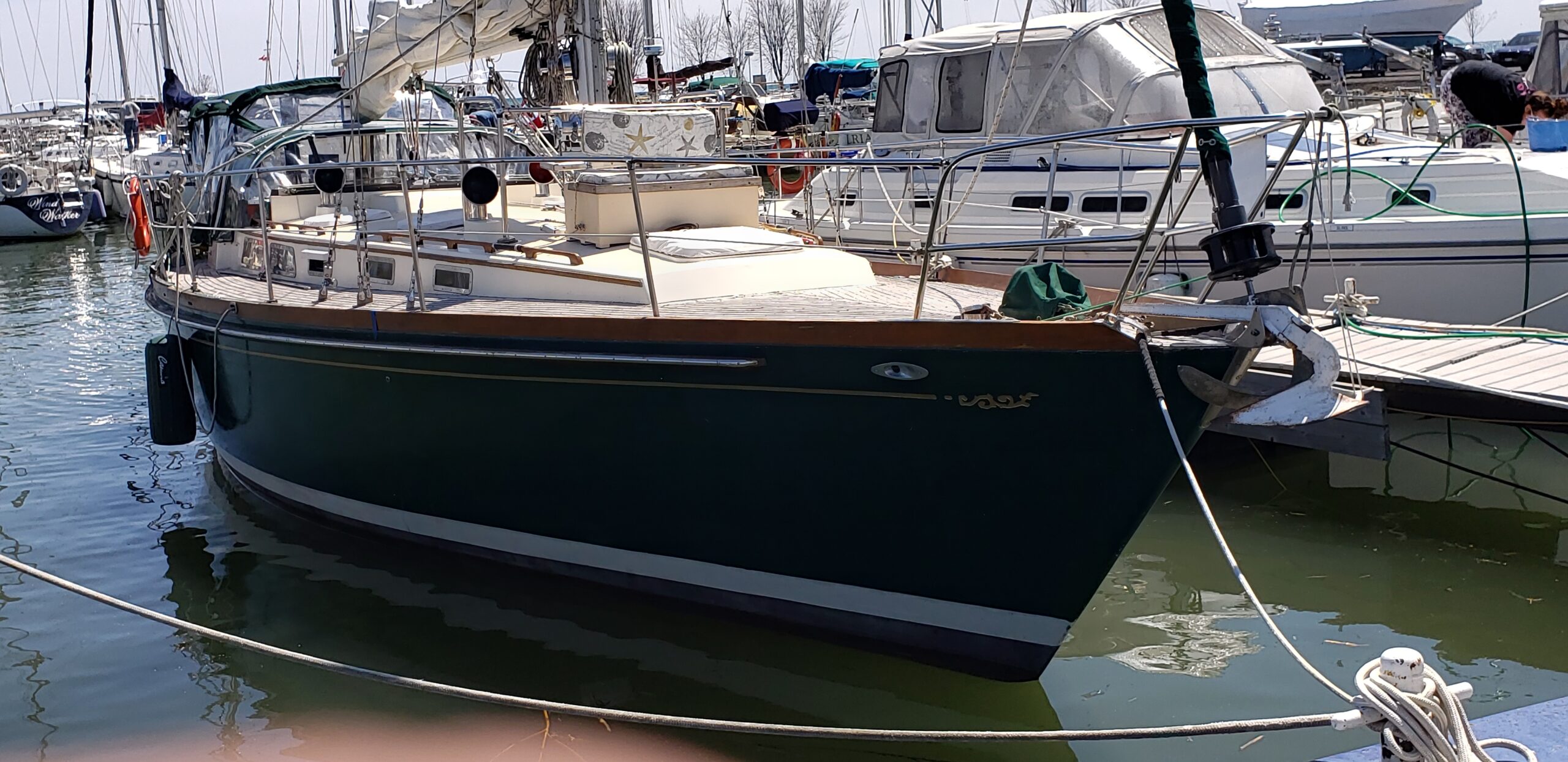
    Out in Lake Ontario off Port Dalhousie with Rob Deak and Jeff Cheevers.   Wind gusting to 16kn and top speed 7.1 kn   

    Broke Topping lift shackle lost a pin.   Used spin halyard to replace it temporarily after docking.    Mainsail cover front zipper broke.  Needs to be sewn and repaired.

  • Out in Lake Ontario off Port Dalhousie

    Saturday 14 May 2022

    Out in Lake Ontario off Port Dalhousie with Rob Deak and Jeff Cheevers.   Wind gusting to 16kn and top speed 7.1 kn   

    Broke Topping lift shackle lost a pin.   Used spin halyard to replace it temporarily after docking.    Mainsail cover front zipper broke.  Needs to be sewn and repaired.

  • Maiden Voyage

    Maiden Voyage

    Friday 13 May 2022

    Crossing from Whitby to Port Dalhousie with Keith Quigley and Jeff Cheevers.  Beautiful inaugural sail.  No incidents.

  • One Night in Havana

    One Night in Havana

    One Night in Havana

    “When we got to prison my boss told me that my new job was to keep him alive, so I slept on the floor beside my boss with a 9 millimetre pistol under my pillow”.

    Todd Mayert has a charm that contradicts his long blond scraggly hair, his bright Hawaiian shirt and plaid shorts. He clearly doesn’t belong at the entrance to Havana’s upscale Telegrapho Hotel, and yet he seemed strangely comfortable. He engaged my companion in insightful banter about the workings of Old Havana. He was from Calgary. He was living in Havana. He shared tips on how the currency works, how Havana works, and bought us peanuts in a paper tube (actually a fistful of tubes for about 25 cents) which we completely enjoyed while listening to his genial patter.

    After about 20 minutes we were whisked off to our illegal Havana version of a B&B, itself a relic of the 1960s with ancient marble, colourful tiles, and walls full of cheap prints and homages to a Catholic way of life.

    I didn’t see Todd again until the second day.

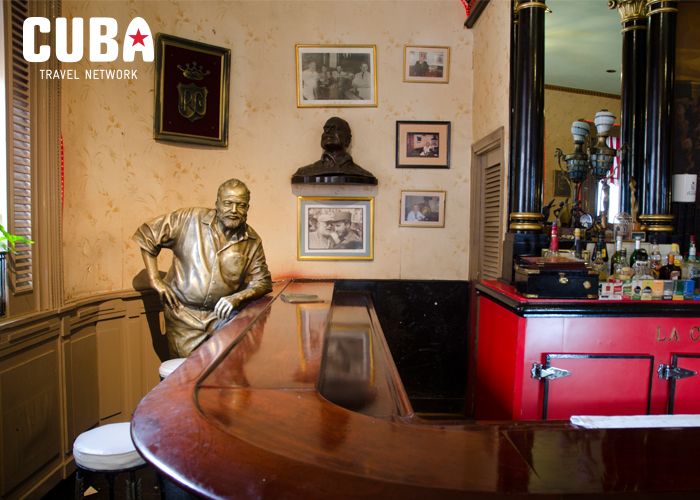
    At the head of Obispo Street, and in the shadow of the Capitol building and Havana Theatre is the Floridita, where Ernest Hemingway used to drink. In a less than subtle homage, the Floridita has a life-sized brass Hemingway holding up the end of the bar and the predominant drinks served are versions of daiquiris, just like the Old Man would have drunk.

    The other end of Obispo Street spills out into a comfortable town square full of old used books next to the harbour and the Castillo de la Real Fuenza, a small fort that has a fascinating collection of nautical displays and amazing model ships. There is a docent in every room that won’t shut up and reluctantly I ran from them before I could fully enjoy the relics and grand history from the Spanish Armada.

    Between the Floridita and the town square is Obispo street; the centre of shopping for tourists in Havana. It is unique in the world. There are no chain restaurants. There is a mix of sparsely shelved appliance stores, internet shops, high end looking restaurants and pubs, and an understated series of tourist stores, all struggling to make this street the tourist commercial centre of Old Havana.

    I walked by the fresh squeezed orange juice stand. On Obispo street this means a half a glass of freshly squeezed orange juice and another half of vodka for about a buck, unless you tell him otherwise. Perhaps vodka is cheaper than orange juice.

    That’s where I ran into Mayert again on the street. While trading rounds of screwdrivers he began to tell me his story. His story started in Panama with his boss, Robert Streuder; “I think he had CIA connections”. It would take the entire evening to get his story out of him, and it came in spurts and not always in a logical order. But then the evening’s story also came in spurts and often did not make sense either.

    He had just gotten out of a Panamanian jail, accused of murder of a real estate investor. He was standing on the corner of a Panamanian grocery store using a pay phone and he saw the victim coming out of the store. They waved, and Ed Moynan drove off into oblivion. He was never seen alive again.

    A very attractive local girl sat down beside us on the giant flowerpot that served as seating for the orange juice stand and started talking with Michael. He introduced us. She was, she said, Lucy, a singer and pointed at a man sitting on the other side of the flowerpot. “He’s my manager.” “Let’s go to a little pub I know just around the corner”

    It wasn’t around the corner, but the blocks we walked allowed Michael to continue his story.

    “I was the last to see Moynan alive so they all thought that I killed him. I freely admitted that I saw him at the supermarket before they told me he was missing, but they had to get a suspect and I was the best one.” They also arrested my boss because of a connection with real estate. Moynan’s body was found in a suitcase near Coronado, Panama about a year later.

    The foreigner’s jail was not comfortable, but no foreigner would have survived the jail for nationals. They don’t feed the prisoners. They rely on their families to bring food daily meals or they can buy from some of the carts they allow in. “You can get anything you want in the prison; drugs, guns, women, food. Anything except out.”

    “My boss told me my new job was to keep him alive, so I slept on the floor beside his bed with a loaded 9 millimetre pistol under the pillow.

    “You can kill someone in a Panamanian jail and they don’t mind too much. Whatever the cause, it is over. But if you wound them there’s all kinds of trouble, and never ever hurt a guard. You wouldn’t survive that.”

    We arrived at the new pub, a relatively nice looking place with white tablecloths. We ordered rum and cokes for ourselves and our new hosts, and the conversation moved from talking with them to uncovering Michael’s fascinating story.

    Another round. Then, as we go to leave the bill came. It was 48 pesos, about 54 US dollars at the time and also about what a doctor in Cuba might make in a month. Michael said, “That’s not right.” It’s too much. They are scamming us. The right price should be about 11 pesos. He started a conversation with the waiter. It started quietly and the voices became louder and angrier. I looked at our hosts for guidance but they had disappeared. The argument continued. The high prices the manager said was for live music. Michael pointed out that there was no music. Their answer: “there will be”.

    I called the waiter’s attention. I said “No”. “No what?” “The right price for this is about 11 pesos. I’ll pay you 12 pesos” He argued and I restated that the price should be around 11 pesos. The waiter became lively and spirited and said some things in Spanish. I heard the word for police several times. Michael was arguing with another two waiters and at some point I was happy that he was on my side and splitting the argument. I said, “Ok, call the cops”, and one waiter left. Now I had time to recall some of Michael’s stories about the Panamanian prison, and remember thinking that I was being one dumb country buffoon. We were both standing up and went to sit down. On the chair between us was a young girl. Neither of us had seen her arrive and sit down between us. The waiters backed, leaving us to deal with this cute new threat. The prostitute was pleasant and friendly and seemed unassociated with the argument. While we talked I learned about a prostitute’s lifestyle in Havana, how things worked and other things not found in a tourist book. It was a journalist’s conversation that included some of Michael’s story and some of the girl’s story.

    “After we had been in jail for four weeks the prosecutor came to visit me. They didn’t have real evidence and he apologized but it would still take two more weeks for me to get out.”

    The waiter brought the bill over. I reached for it but he pulled it away. It was still for 48 pesos. “I ill call the police” he said in Spanish. I knew what he meant. “I thought you were calling the police”. I looked around and there was Michael but the prostitute had vanished.

    “Christ Michael, I want another drink. Let’s get out of here.” And then to the waiter, “Where are the police?”

    Two minutes later the officer walked in and the four waiters gave a lively and spirited account. The cop shook his head. It seemed bad for us. He took a few steps towards us and then headed for the door and left. I said to the waiter, “If he doesn’t care, then nor do I. Here’s 11 pesos.”

    Michael and I walked out and headed back to the safety of Obispo Street.
  • A Brief History of Pho (“Fa”)

    Pho was invented in the 1920s in Northern Vietnam  

    In 1954 when Viet Nam split into North and South, the migration of northerners to the south brought pho to Saigon.

    In the north it has retained its spiritual roots as a basic clear soup with few embellishments.  

    In the south, innovation has run rampant!  Addition of many different meats, side dishes of sprouts and lime and basil, and other things have made a faux pho. 

    When the Vietnam war ended, Pho was brought to North America with the wave of immigration and caught on in most urban centres. 

    And now the biggest surprise of all.   That original Pho made in the 1920s is a fusion of French and Vietnamese styles!  “Feu”

  • Icewine and Larionov’s Red Wings

    It is 1 o’clock in the morning and the smartest, fastest and toughest hockey players from Russia walk into Igor Larionov’s suite in the Toronto’s King Edward Hotel. They have played two exhibition games earlier in the day as a part of Larionov’s induction into the Hockey Hall of Fame this November 10th weekend. They are looking to kick back, relax and crack open a bottle…of Canadian Icewine.

    Igor Larionov autographs his new Triple Overtime Icewine
    Igor Larionov autographs his new Triple Overtime Icewine

    One would expect a glasses of vodka, cans of beer, or even a large jugs of water, but Igor is also in town to announce the launch of his newest wine, “Centre Ice” and Larionov, also known as “The Professor” pours perfect Icewine portions and hands them to his friends. Since retiring from the NHL in 2004 Larionov has been working with long time friend Mike Davis in his IL Triple Overtime Wine Company and selling wines to Russia. On the day before Larionov had launched his first Canadian Icewine under the IL Triple Overtime brand, crafted by Pillitteri Estate Winery in Niagara.

    They sip appreciatively and then Viacheslav (Slava) Fetisov’s booming voice rings out, “Now we talk only Russian!” The Icewine is clearly a hit and after congratulations to Igor on his lesser triumph of the weekend, the launch of his wine company’s first Icewine, the conversation turns to other things.

    Larinov is about to be inducted into the Hockey Hall of Fame. He carries his modesty with a quiet triumph, with confidence and a quiet voice that makes one want to lean in and catch every word. Fetisov is enjoying the Icewine, holding it up properly, by the stem, but incongruously calling in one of the few English words to me, the guy by the bar, “Hey, big guy, more please!”

    Alexander Medvedev also holds his glass out for a refill. As the head of the new KHL, Russia’s newest major hockey league, he is in town to celebrate Larionov’s career highlight, but has drawn some attention over some of the bushfires that have arisen between the NHL and KHL over talent acquisition. Alexander Radulov leads the controversy as high profile NHL players who have jumped to the KHL. As one of the first Russian players to jump to the NHL, Larionov is familiar with the issues, and he blazed a trail for Slava Fetisov and others to come to North America after the breakup of the Soviet Union.

    Larionov, who was welcomed to the KHL as a member of the Board of the KHL is a public voice for player development inside Russia, working with the NHL to make the game recognized globally and to extend the reach of hockey around the world.

    The whole issue may have been solved among them in the discussion over Icewine, but they are only speaking Russian and the Big Guy only speaks English, so he is just happy that they liked the Icewine.

    The relaxed chatter in Russian is broken again by the booming voice of Fetisov in English. “Big Guy, you should fill the Stanley Cup with Icewine.” Valeri Kamensky smiles but the Big Guy doesn’t back down. “Slava, get some guys together and bring me the Stanley Cup in June and I’ll fill it with Icewine for you”.

    It could happen.

  • Icewine and Innovation in Niagara

    I was looking at the table wine grapes being harvested now in Niagara and wondered whether to hazard a guess at what the Icewine harvest might be like when January, or February comes.  Then I thought about how wrong we would all have been to take early guesses at the Niagara table wine harvest.

    Niagara had a lot of rain this summer, and then 25 days of straight sunshine in September, which were almost perfect conditions for a wonderful grape harvest.  But then it started to rain. It rained through October.  Then it got cold last week.  The  farmers had taken a lot of the white grapes off, but with a lot of the reds still hanging on the vine, an early frost hit overnight.  A crop that promised lots of quality and quantity still has the quantity.  However, the stellar quality is now less than stellar, but certainly not as bad as  ‘bad’.

    However, it has the local media in an uproar reporting a massive (in Niagara, 12,000 tonnes is ‘massive’) surplus of grapes that will make farmers go bankrupt, and so on.  News media makes their money on bad news.

    I asked a couple of my suppliers if they were affected by this glut of less than ideal quality grapes.  They didn’t seem concerned because they had commitments for all of their grapes.

    One said, “Sure, the guys who are trying to grow 10 tonnes per acre have too much crop and the brix and flavour just isn’t going to be as concentrated as it should be so of course it will be hard to sell.  I grow two to three tonnes per acre and they are all sold.”

    Farmers can control how large a harvest will be by pruning the fruit in early season.  By pruning back many of the grapes early, the remaining grapes will have better quality because the vine will focus on feeding less fruit with more goodness. This is as much art as science.  Farmers who don’t prune or prune very little are making far more grapes, but they will be of a lesser brix or flavour and the crop, while bigger, will be less valuable, and harder to sell.

    “What about the frost damage?”  I asked another family winemaker who grows his own grapes. When the frost kills the leaves, development of the grape ceases.  If a farmer doesn’t have wind machines to protect his vineyards from frost, his crop runs the risk of fungus, rot, and damage, and the grapes will have ceased to develop normally.

    “Some farmers will be claiming crop insurance.  I’m happy that the frost has killed off the canopy.  The grapes are finished growing, and now I’m going to let them desiccate on the vine a little bit, concentrate the sugars, and then pick them.  It’s kind of a mini-amarone thing happening right on the vine.”

    phil in the vines

    I like this kind of innovation.  In an industry where one doesn’t expect so much innovation, a little frost allowed this grower to make use of weather that couldn’t be expected to improve some of his grapes, and he had a plan that he had thought forward through fermentation and probably right to his shop shelves.

    Innovation is good.  Almost 200 years ago German farmers had their grapes frozen by an early winter and invented Eiswine, which was adapted to become Icewine,  Niagara’s, and Canada’s signature wine.

    Another farmer will be grafting Malbec buds onto 30 year old roots and protecting them against the frost.  He’ll have something close to an old vines Malbec crop to take off next year and since as a winemaker, he lives and breaths his reds, I can’t wait to see what Malbec comes out of that winery.  Malbec is a rare variety in Niagara.

    At Pillitteri, they have just released another sparkling  Icewine. This time it is a sparkling Cabernet Franc.  Pillitteri is the leader in bringing different varieties to market.  They are still celebrating that they have been able to keep the sangiovese vines alive through the winter so we may see another vintage of Icewines reminiscent of Chianti.   Pillitteri is also plotting to make a ripasso style wine, but beyond that, those in the know won’t share the secrets until it is in the bottle.  They already make a winning sur lies Chardonnay, so Pillitteri is not afraid of a little innovation with secondary fermentation

    Over at Reif Winery, Klaus Reif was walking around his tasting room offering customers samples of his first batch of raisins.  He’s adopted an as yet, still secret technology from another branch of agriculture and dried out a few tonnes of Coronation table grapes, virtually inventing a new foodstuff, the Niagara raisin.

    The Niagara Region is developing culinary and innovative local ingredients like Klaus’s help make the experience truly local.   If a Niagara raisin is on the menu next time I’m out dining, I’m ordering it!

  • A Side Trip to Cinque Terre

    Manarola from the trail

    I found the unkindest words from a wine writer in one of those  long forgotten big coffee table books.     In the Italian wines section there was a simple entry about Cinque Terre wines.  I also recall that Icewine and wines from Canada weren’t even mentioned in the book so this was a very long time ago.

    “They make white wine mostly.  Some years it is passable.  Other years you wonder why they bother.”

    I’ve always remembered that phrase as the compelling reminder of cruel dismissal in a very minor section by a long forgotten author in a book so far in my past that I don’t recall the colour of the cover.

    Of course I had to go to Cinque Terre and explore the wine.

    Cinque Terre is a chain of five small towns on the Western side of Italy’s boot, about halfway between Genoa and Pisa.   They are connected by an impossibly convoluted mountainous road and the walking trails that make these five jewels, each with a different character, such a destination for hikers.   They also are connected by trains which rival any city’s subway for easy use.

    I drove down from Munich, which gave me a chance to enjoy the mountains of northern Italy, where the locals still cling to the belief that they are Germans, down to Lake Como.  Along that road, at no particular spot the locals begin to relent and embrace Italy.  Then the mountains spit you out into Amarone country, through the vast vineyards of the Po valley and on through Lombardy until mountains reappear and one arrives in Liguria.

    Long ago, while Britain’s King John was signing the Magna Carta, and the Vikings were settling Canada, the Mongols ruled China and were sacking Moscow the people in the Cinque Terre region began terracing their vineyards on the slopes of the Mediterranean Sea.

    Vernazza from the trail

    I did the math.  They moved more rocks to build the Cinque Terre terraces than the Egyptians moved to build the great pyramids.

    Today, the greater efficiencies of the flatland vineyards have turned many of the terraces into wonderful local gardens growing white asparagus, lemons, olives, and grapes. While the local wine industry is under threat from more efficient areas of Italy, Cinque Terre remains an amazing place to hike, eat and vacation.

    And now my beef with that wine writer.  Local wines, wherever you find them, can be simply amazing if you wrap them in a traveler’s experience.

    Wake up early in one of Cinque Terre’s striking villages, perhaps in Manarolo or Vernazza.   Open the shutters of the trattoria and let the light stream in, and hit the market early.  Pack fresh focaccia, sun dried tomatoes, hard and tangy Genovese cheese and pick a local bottle of white wine.

    Hitch a train or hike over to Manarola , and begin climbing south until you reach the ancient church, Santuario della Madonna di Montenero, at the top. Then sit down and enjoy a late breakfast with wine made of your morning’s market shopping on the side of a hill, 400 meters above the Mediterranean Sea.  Talk, doze, watch, wonder at how this part of the world is so elegantly put together and yet everything is on a slant. It doesn’t matter, and nothing else in the world matters.

    Discovering Vernazza

    Then head down the hill into the towns and explore, looking for the perfect place to share a bottle of wine and watch the sunset.  That can take an entire afternoon.  Pick up a different local white wine.  Catch an early dinner of fresh local fish and Fettuccine di Pesto alla genovese.  Then head down to the rocks under the fort at in Vernazza’s harbour or settle in to natural armchairs carved out of rock high up in Manarola, or a private beach off the Via dell’ Amor walkway and make the wine last through the sunset.

    Do this with a lover each day for an entire week and prove that anyone suggesting that local wines anywhere are just passable should get off their couch!

  • World Shark Class Sailboat Championships

    Again, no Icewine connection, other than this is in the heart of Canadian Icewine country!

    shark start

    This is a tip of the hat to the over 65 boats and crews that will be attending the 50th Shark Class Sailboat World Championships here in Niagara on the Lake this coming week.  Crews will be from at least five countries, three in Europe and it is going to be special. 

    I’m not competing.  From my previous posting you might think that I kind of lost my boat, “Humbly, the Magnificent Champion of the Universe, but no, that happened quite a while ago and my boat is fine.  I’m just helping with the organizing until they notice that it’s really helping with the disorganizing!

    If you are local, the event is open to the public, although the races will take place out all week out on Lake Ontario.

  • MÉDECINS SANS FRONTIÈRES in Abkhazia

    Nothing about Icewine today.  However, if you are enjoying reading about Abkhazia, please take a moment to look at Dr. Genie Pritchett’s blog as well.

    Genie is an American doctor who volunteered with Doctors Without Borders, (MÉDECINS SANS FRONTIÈRES) to go to Abkhazia and her perspective is honest, interesting, and well written.

    Find her blog here or cut and paste http://www.abkhaziaadventures.blogspot.com/